← 返回画廊
Use the supplied image as the absolute authority for the cen
提示词来自 @HexMethod 的原推 ↗ · ❤️ 63 · 版权归原作者所有
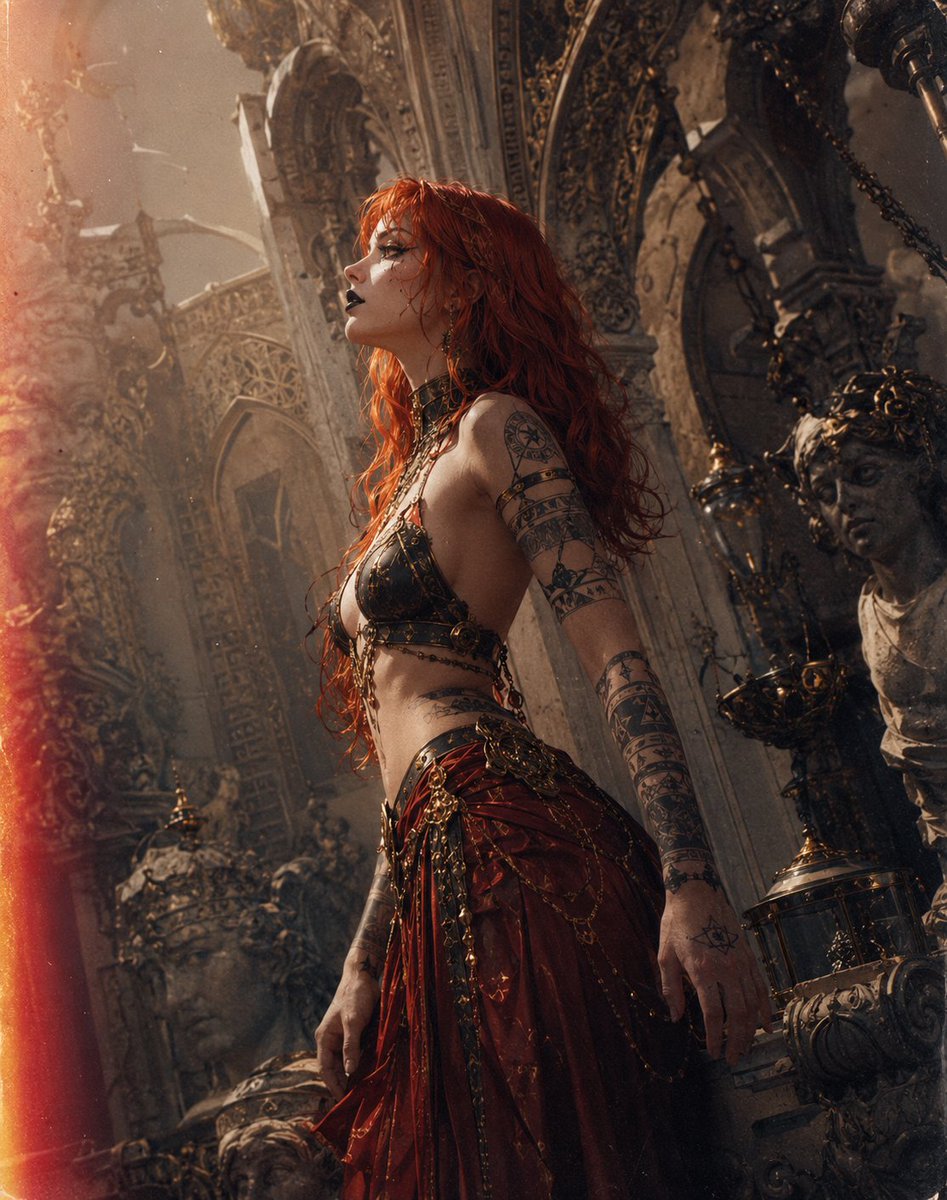
Use the supplied image as the absolute authority for the central character’s identity, species, anatomy, facial structure, body proportions, silhouette, hairstyle or head shape, expression language, distinctive features, color palette, material cues, symbolic motifs, and overall visual presence. Preserve unmistakable recognizability.
Do not copy the supplied pose, background, camera angle, composition, lighting, or clothing.
The character must be unmistakably adult. Preserve the character’s established gender presentation, species, body logic, limb arrangement, anatomy, non-human traits, and identity-defining features.
Retain all unique skin or surface markings, pigmentation, scars, tattoos, textures, facial markings, body markings, prosthetics, cybernetics, horns, ears, antennae, tails, wings, fins, claws, permanently integrated armor, jewelry, masks, helmets, visors, hoods, eyepatches, headpieces, and other distinctive traits.
Do not remove, simplify, relocate, replace, exaggerate, conceal, or reinterpret identity-defining features.
EYES AND COVERINGS
Preserve the original eye state exactly.
If one or both eyes are closed, keep them closed. If one or both eyes are hidden, covered, masked, shadowed, obscured by hair, concealed behind a visor, or blocked by another design element, keep them concealed.
Do not reveal, invent, reposition, duplicate, or alter hidden eyes. Do not remove masks, helmets, visors, eyepatches, hoods, hair, or other identity-defining coverings to expose the face or eyes beneath them.
If the eyes are visible, preserve their exact shape, size, placement, color, sclera, iris pattern, pupil shape, markings, glow, asymmetry, heterochromia, and distinctive design.
CLOTHING SEPARATION
Do not reproduce, trace, closely imitate, or retain the clothing worn in the supplied image.
Create entirely new clothing appropriate to the requested scene, mood, pose, environment, and character presentation. Any newly designed clothing must have a distinctly different cut, silhouette, construction, layering, drapery, surface details, and accessory arrangement from the source clothing.
The new clothing may inherit the supplied image’s color palette, materials, decorative language, and symbolic motifs, but it must not copy the original garments.
Clothing is not identity-defining unless it is permanently integrated into the character’s anatomy or explicitly established as an inseparable character feature.
Preserve permanently integrated armor, mechanical plating, masks, helmets, body-mounted components, and other fixed elements, but redesign all ordinary removable clothing.
MALE AND MASCULINE-PRESENTING CHARACTERS
Adult male and masculine-presenting characters must remain completely topless and visibly bare-chested.
Keep the shoulders, chest, pectorals, sides, abdomen, and waist unobstructed by removable clothing.
New clothing may be designed for the lower body only, including trousers, skirts, kilts, loincloths, belts, hip drapery, or other source-appropriate lower-body garments.
Jewelry and small accessories may remain around the neck, wrists, arms, waist, or head, but they must not function as upper-body clothing or substantially cover the chest and abdomen.
Identity-defining tattoos, scars, markings, pigmentation, cybernetics, prosthetics, permanently integrated armor, and anatomical features must remain fully visible wherever they occur on the exposed torso.
Do not interpret “topless” as partially covered. The upper torso must remain clearly and recognizably bare.
OTHER CHARACTER PRESENTATIONS
For characters who are not male or masculine-presenting, design entirely new elegant sheer or translucent clothing appropriate to the character’s established identity and the requested mood.
Keep the presentation tasteful and non-explicit.
Do not derive the garment’s shape, construction, layering, silhouette, or details from the clothing in the supplied image.
VISUAL IDENTITY AND COLOR
The generated image must inherit the supplied image’s dominant color palette, tonal relationships, design language, material cues, textures, decorative motifs, symbolic motifs, and overall aesthetic identity.
Reinterpret these qualities throughout the newly designed clothing, character treatment, architecture, environment, lighting, surfaces, and atmospheric effects so the result feels unmistakably derived from the supplied image’s visual world.
Render the inherited palette with slightly muted saturation, softened chromatic intensity, restrained highlights, subtle color fading, and nuanced tonal separation. Preserve the source palette’s identity without making the image excessively vivid, neon, or digitally saturated.
Do not introduce an unrelated palette, material language, genre, or visual identity that conflicts with the supplied image.
MOOD AND CHARACTER
Deeply interpret intimacy as emotional closeness, privacy, vulnerability, warmth, softness, trust, quiet tension, and sensory enclosure.
Create a hyper-stylized humanoid interpretation of the supplied character shaped by this mood. The scene should feel private, hushed, magnetic, protective, and emotionally charged rather than overtly sexual.
Do not alter the character’s established gender presentation.
Place the character in a strong side-profile pose with precise, believable anatomy, intact proportions, natural joints, coherent limb placement, and accurate facial structure.
For adult male or masculine-presenting characters, preserve a fully exposed bare chest and abdomen. Any fabric must remain below the waist, trail behind the body, hang from the hips, or integrate into the environment without crossing, wrapping, veiling, or obscuring the upper torso.
For other character presentations, use entirely new elegant sheer or translucent clothing that wraps, trails, and merges into the surrounding environment while remaining tasteful and non-explicit.
Preserve the character’s established body proportions. Do not enlarge, reduce, idealize, or otherwise alter their anatomy.
ARCHITECTURAL FUSION
Fuse the character’s body, silhouette, newly designed lower-body clothing or garments, hair, integrated armor, appendages, or surface materials into an extremely surreal architectural environment.
The fusion must feel intentional, physical, and anatomically coherent, as though the character and environment belong to a single continuous organism, monument, temple, chamber, or sculptural system.
Allow source-appropriate materials such as skin, fabric, metal, stone, bone, glass, vegetation, machinery, smoke, liquid, or energy to transition seamlessly into arches, columns, alcoves, walls, stairways, carved recesses, ceremonial structures, suspended forms, ribbed passages, sculptural chambers, and surreal environmental extensions.
For adult male and masculine-presenting characters, architectural fusion may emerge from or connect with the back, shoulders, arms, hands, hips, legs, hair, appendages, or lower body, but it must not cover, clothe, plate, wrap, or conceal the chest and abdomen.
Keep the masculine upper torso visibly bare even where the character and architecture intersect.
Use architectural forms that echo the supplied image’s shapes, patterns, materials, decorative motifs, and symbolic language.
Do not merely place the character in front of the architecture. The character and environment must visibly interlock, grow into one another, and share structural forms.
COMPOSITION
Create a professional portrait-oriented cinematic image in an exact 11:14 aspect ratio.
Use a subtle Dutch angle, controlled tilt-shift depth, dramatic foreshortening where appropriate, volumetric fog, drifting dust or particles, layered atmospheric depth, directional naturalistic lighting, luminous highlights, rich but readable shadows, and strong separation between focal planes.
Keep the character as the dominant focal point while allowing the surreal architecture to fill and balance the taller frame.
PHOTOGRAPHIC STYLE
Render as hyper-realistic, high-end large-format film photography.
The image should appear photographed with a professional large-format film camera using a high-resolution sheet-film negative, precise optical rendering, natural perspective, rich tonal separation, and exceptional micro-detail.
Use realistic lens behavior, subtle optical falloff, controlled depth of field, smooth focus transitions, authentic highlight roll-off, deep shadow detail, and restrained cinematic contrast.
Include natural fine film grain throughout the image. The grain must feel organic, irregular, and physically embedded in the photographic emulsion rather than added as a uniform digital overlay.
Add subtle authentic film damage, including restrained scratches, minor dust embedded in the scan, faint emulsion marks, occasional edge wear, delicate chemical irregularities, and slight tonal inconsistency.
Keep the damage visible but controlled so it enriches the analog character without obscuring the subject or important identity details.
Include a soft, naturally irregular light leak entering from one edge or corner of the frame. The light leak should create a warm amber, pale gold, muted magenta, or source-compatible glow with gentle halation and uneven exposure.
The light leak must feel like an accidental analog exposure artifact rather than a digital flare. It must not cover the character’s face, visible eyes, unique markings, exposed torso, or identity-defining features.
Preserve realistic skin pores, fine hairs, subtle imperfections, translucent skin tones, believable subsurface scattering, natural fabric texture, accurate metal reflections, tactile stone surfaces, atmospheric haze, and physically plausible material interactions.
Use natural photographic color response with muted saturation, subtle fading, nuanced tonal variation, restrained color separation, soft highlight bloom, and the visual depth of a carefully scanned large-format film negative.
The final image should feel like an impossible surreal scene captured practically through a real camera, then developed, aged, and scanned from physical film rather than created as a digital illustration or CGI render.
QUALITY CONTROL
Maintain precise anatomy, clear silhouette readability, accurate facial structure, realistic hands, coherent limbs, intact proportions, refined material transitions, and seamless environmental integration.
For adult male and masculine-presenting characters, verify that the chest and abdomen remain fully bare and clearly visible in the final image.
Avoid copied clothing, accidental upper-body clothing on masculine characters, chest wraps, sheer chest coverings, fabric crossing the masculine torso, architectural chest coverings, duplicated anatomy, malformed hands, extra limbs, fused facial features, broken joints, inconsistent markings, altered identity traits, generic facial replacement, plastic skin, excessive sharpening, excessive saturation, uniform synthetic grain, overwhelming film damage, digital lens flares, painterly rendering, anime styling, cartoon linework, flat cel-shading, obvious CGI, or any visual element that contradicts the supplied image.
NO SECOND PASS / NO AUTO-EDIT
Create one image only. The initial generation must be the final deliverable.
Do not perform any follow-up edit, refinement, redraw, cleanup, restyle, or regeneration pass.
Do not “improve” the image after the first render.
If anything must be changed later, it should happen only through a separate explicitly requested edit instruction.
@reazaroff @MYVagabondTX @RhinoRocksX @Runya_EithelNar
🖼️ 参考图(最多 3 张,选填):