Image 1 is the sole character identity reference.
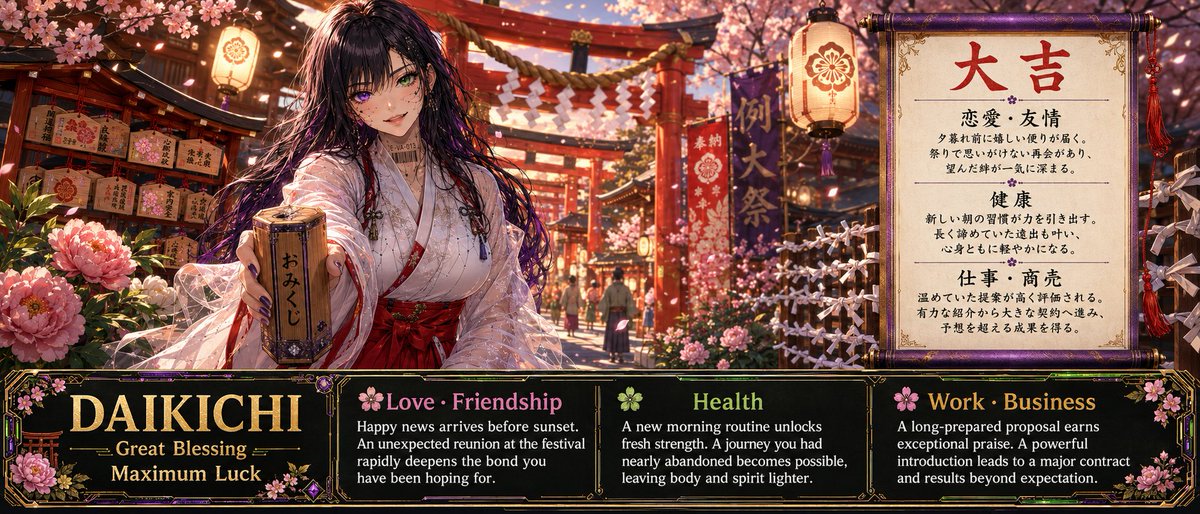
Create a 21:9 ultrawide horizontal illustration set at a festive Japanese Shinto shrine during a seasonal celebration. Transform the character from Image 1 into an appropriate shrine attendant while preserving their recognisable face, hairstyle, hair colours, body or species traits, signature features, personality, and original visual art style.
Adapt the role to the character:
- Present a feminine character as a shrine maiden, wearing a properly layered white kimono or kosode, red hakama, and elegant chihaya.
- Present a masculine character as a Shinto shrine priest, wearing formal white shrine robes, hakama, and an appropriate ceremonial outer garment.
- For an androgynous or non-human character, choose the role and attire that best suit their established identity without changing their defining traits.
The character stands beside the shrine’s fortune area and warmly offers an omikuji-bako for the visitor to draw a single mikuji-bō fortune stick. Make the character as cheerful, festive, expressive, or ceremonially dignified as their existing personality naturally allows. Surround them with vermilion torii gates, wooden shrine architecture, braided shimenawa rope, shide paper streamers, hanging lanterns, ema wish plaques, tied paper fortunes, decorative festival banners, seasonal flowers, and softly dressed shrine visitors in the distant background. Keep the character and fortune ritual as the clear visual focus.
Use the wide 21:9 format to create a balanced layout:
- place the character as the main focal point in one side or central third of the composition;
- show a beautiful shrine environment spreading across the wider background;
- include one clean decorative fortune panel in a clearly readable area of the frame;
- reserve a dedicated bottom banner across the full width of the image for the English translation.
Include one clean decorative panel showing the resulting omikuji fortune fully unfurled. For every new image generation, randomly select exactly one fortune category from the following list:
Daikichi — 大吉 — Great blessing / maximum luck
Chukichi — 中吉 — Middle blessing
Shokichi — 小吉 — Small blessing
Kichi — 吉 — Blessing / good luck
Suekichi — 末吉 — Future or eventual blessing
Kyo — 凶 — Bad luck / curse
Kyo-nochi-daikichi — 凶後大吉 — Bad fortune that later becomes a great blessing
Write the selected fortune category prominently in correct Japanese characters at the top of the unfurled fortune. Beneath it, generate three distinct Japanese fortune messages with headings for:
恋愛・友情 — Love and Friendships
健康 — Health
仕事・商売 — Work and Business
The three messages must specifically reflect the randomly selected fortune level. Make each prediction concrete, varied, and imaginative rather than repeating generic advice. Mention believable events, choices, warnings, opportunities, meetings, delays, reconciliations, discoveries, or changes that suit each category.
Examples of tonal direction:
- 大吉 should predict unusually fortunate developments and strong opportunities.
- 中吉 or 吉 should offer meaningful success with sensible effort.
- 小吉 should promise modest but genuine improvements.
- 末吉 should describe delayed rewards, patience, and future improvement.
- 凶 should contain serious but avoidable warnings and practical caution.
- 凶後大吉 should begin with difficulty or disruption before revealing a major positive reversal.
SPECIAL RULE FOR 凶 ONLY:
When and only when the selected result is 凶, include the exact additional English sentence:
“you should Reprompt to improve your luck.”
Do not include this sentence, a paraphrase of it, or any similar reprompt instruction for any other fortune category.
At the bottom of the image, create a large, elegant, fully designed translation banner that stretches across the width of the composition. The banner must have the following layout:
- On the far left, a prominent blessing panel showing the English fortune name in large decorative text, for example “DAIKICHI”, with a smaller elegant subtitle beneath it such as “Great Blessing”.
- To the right of that, create three clearly separated translation sections in a row:
1. Love · Friendship
2. Health
3. Work · Business
- Each section should contain the English translation of the corresponding Japanese fortune message.
- Use a clean ornamental layout with borders, dividers, elegant typography hierarchy, and a polished designed-banner appearance similar to a refined game UI or decorative fortune card.
- The banner layout should resemble the example structure: blessing block on the left, then the three translation sections across the rest of the banner.
- Do not copy one fixed colour scheme. Instead, choose the banner colours, accents, and decorative detailing based on the referenced character’s palette and the scene, so the banner feels custom-made for that character while still remaining readable.
- Keep the English translation text larger, clearer, and easier to read than ordinary decorative text, while still secondary to the main illustration and the Japanese fortune panel.
Use a warm, celebratory atmosphere with glowing lantern light, natural daylight or gentle twilight, drifting petals or leaves, polished wood, white paper decorations, and rich vermilion accents. Preserve the visual art style of Image 1 across the entire character and environment rather than shifting into an unrelated generic style.
Create exactly one main version of the referenced character. Do not duplicate the character or place alternate versions of them inside the fortune panel. Use only the requested Japanese fortune text and its English translation; do not add random letters, unrelated signs, fake logos, watermarks, or additional fortune categories.
..............................END OF PROMPT..............................
#POTD #PromptOfTheDay #AIArt #DigitalArt #ShintoShrine #Omikuji #JapaneseFestival #CharacterArt
🖼️ 参考图(最多 3 张,选填):