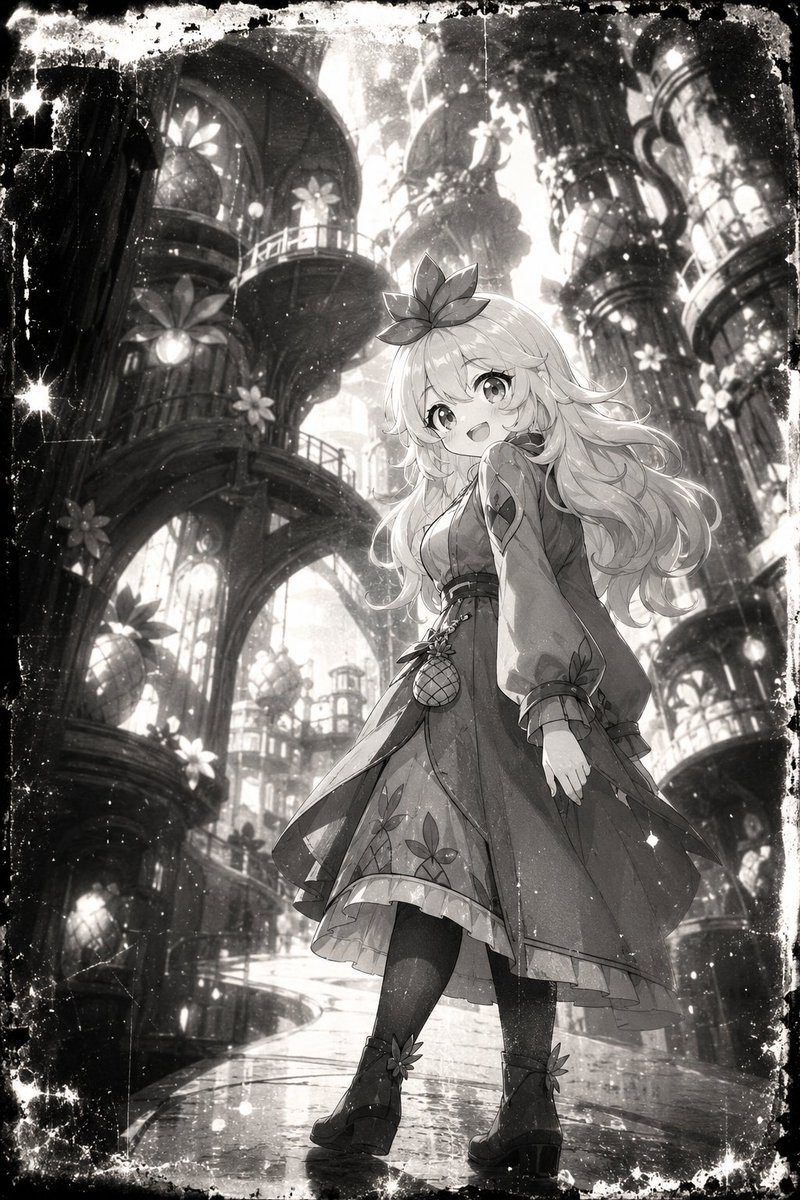
IDENTITY AND SOURCE AUTHORITY
Use the supplied image as the absolute authority for the subject’s identity, species, anatomy, facial structure, proportions, silhouette, head shape or hairstyle, expression language, markings, materials, motifs, and permanent features. Preserve unmistakable recognizability.
Do not copy the supplied pose, background, composition, camera angle, outfit, or rendering medium. Human or humanoid subjects must be unmistakably adult.
Preserve established gender presentation, limb count, species logic, pigmentation, scars, tattoos, prosthetics, cybernetics, horns, ears, tails, wings, fins, claws, integrated armor, jewelry, masks, helmets, visors, hoods, eyepatches, and headpieces. Do not normalize, relocate, remove, conceal, replace, or simplify identity-defining traits.
Preserve the eye state exactly. Closed eyes remain closed; concealed eyes remain concealed. Never reveal, invent, open, move, or reinterpret hidden eyes. If visible, preserve their shape, spacing, sclera, iris pattern, pupil shape, markings, glow, heterochromia, mechanical structure, and asymmetry.
Do not remove, open, shrink, replace, or redesign permanent coverings or accessories. Never invent features beneath concealed areas.
CREATURE FIDELITY
If the source depicts an animal, creature, monster, or non-humanoid species, preserve its authentic anatomy, posture logic, locomotion, limb structure, skull, facial anatomy, body covering, and silhouette.
Do not anthropomorphize it. Do not add a human face, torso, hands, legs, posture, expressions, musculature, or clothing unless clearly present in the source.
Do not make quadrupeds bipedal, replace paws with hands, turn wings into arms, simplify multiple limbs, humanize the skull, or force the creature into a humanoid body plan.
DESIGN TRANSLATION
If the source contains a character, preserve that character through elevated live-action cinematic realism.
If it contains an object, environment, architecture, symbol, or abstract design, translate its visual identity into an original adult humanoid through silhouette, anatomy treatment, markings, clothing, armor, hair, prosthetics, accessories, and materials.
Carry the source image’s shapes, textures, symbols, architecture, materials, natural or mechanical forms, visual rhythm, and emotional tone throughout the subject and environment.
Do not simply place source patterns onto a generic body or costume. The source must influence silhouette, surfaces, wardrobe, accessories, architecture, lighting, and atmosphere.
Do not add generic cyberpunk, fantasy, Gothic, celestial, floral, Baroque, chrome, gold, neon, tactical, or science-fiction imagery unless supported by the source.
LIVE-ACTION FACIAL REALISM
Human and humanoid faces must appear physically real, mature, anatomically grounded, and photographed from a live-action subject.
Preserve realistic cranial structure, facial planes, brow ridge, eye sockets, cheekbones, nose projection, jaw, chin, lips, eyelids, ears, and natural asymmetry.
Use realistic eye size and spacing, defined sockets, believable eyelid thickness, tear ducts, sclera exposure, iris scale, and surrounding skin tension.
Render a fully structured nose, naturally proportioned lips, pores, fine lines, vellus hair, under-eye structure, eyelid folds, scars, markings, and natural imperfections.
No anime, manga, doll, figurine, video-game, beauty-filter, or illustration-derived facial construction. Do not enlarge the eyes, shrink the nose, shorten the midface, sharpen the chin, simplify the mouth, smooth facial planes, or create a generic beauty face.
BLACK-AND-WHITE TREATMENT
Render entirely in severe high-contrast black and white.
Translate the source image’s color hierarchy into monochrome values. Preserve which areas are dominant, subdued, bright, dark, reflective, translucent, patterned, or emphasized.
Use dense blacks, luminous whites, hard separation, selective crushed shadows, and enough midtone detail to preserve anatomy, markings, materials, coverings, visible eyes, and silhouette.
No color accents, sepia, cyanotype, warm tinting, or selective color.
ANATOMY AND PROPORTIONS
Preserve the subject’s established anatomy, proportions, species logic, and physical presence.
Maintain coherent scale, skeleton, spine, limb length, joint placement, hands, feet, digits, claws, hooves, wings, tails, fins, additional limbs, mechanical structures, and species-specific anatomy.
Use natural posture, realistic weight distribution, correct attachment points, and physically plausible proportions. All limbs, coverings, armor, prosthetics, and non-human structures must be complete, correctly attached, and readable.
Do not hide difficult anatomy to avoid rendering it accurately.
ORIGINAL WARDROBE AND MATERIALS
The character’s clothing must be completely new. Do not copy, recolor, trace, imitate, or partially reuse the reference outfit.
Create a wardrobe uniquely tailored to the character’s anatomy, species, proportions, silhouette, identity, and visual world.
Derive its motifs, geometry, textures, symbols, and materials from the source without repeating the original garment shapes, cuts, layering, accessories, or construction.
Use original tailoring, seams, closures, draping, folds, tension, compression, weight, wear, and attachment points. Clothing must accommodate horns, wings, tails, fins, prosthetics, cybernetics, armor, and other anatomy.
Preserve permanent masks, helmets, jewelry, armor, prosthetics, cybernetics, and identity-defining accessories.
Render skin, fabric, hair, fur, feathers, metal, glass, leather, stone, ceramic, bone, shell, scales, synthetic materials, and mechanical surfaces with distinct microtexture, roughness, thickness, wear, reflections, and physical separation. No generic plastic surfaces.
POSE AND BODY LANGUAGE
Create a completely new pose that is clearly and substantially different from the supplied pose.
Do not copy, trace, mirror, rotate, reverse, crop, lightly modify, or closely approximate the reference pose. Do not reuse its joint angles, weight distribution, torso orientation, head direction, limb placement, gesture, balance, action, or body silhouette.
Develop an original pose for the new composition, environment, wardrobe, and subject design. Change the relationship between the head, torso, pelvis, limbs, and camera so the result cannot be mistaken for a variation of the reference pose.
The pose must preserve identity, anatomy, proportions, limb count, mobility, permanent features, and species-specific body logic. It must be intentional, balanced, anatomically plausible, and appropriate to the subject.
Keep all limbs, hands, feet, wings, tails, fins, horns, prosthetics, cybernetics, and other structures complete, correctly attached, and visible. Do not obscure identity-defining markings, eyes, coverings, accessories, or essential anatomy.
For non-humanoid creatures, use natural posture, locomotion, skeletal structure, balance, and behavior. Do not force human gestures, stance, contrapposto, sitting positions, or theatrical humanoid body language.
Use the Dutch angle independently of the pose. Camera tilt must not disguise a copied pose.
COMPOSITION AND ENVIRONMENT
Create a strict 2:3 professional cinematic composition with a controlled Dutch angle.
Keep the subject dominant while the environment communicates immense scale.
Use extremely shallow depth of field with precise focus on the most identity-critical visible feature. Keep essential facial anatomy, coverings, markings, skin, hair, fabric, and nearby accessories sharp, with rapid natural falloff toward secondary regions and distant architecture.
Use realistic bokeh, subtle optical distortion, restrained chromatic aberration, aggressive highlight bloom, and photographic halation. Avoid fisheye distortion, anatomy-warping perspective, oversized foreground limbs, or cropping that hides permanent traits.
Place the subject within an immense surreal architectural environment derived from the source image’s shapes, motifs, materials, symbols, and design language.
Use impossible chambers, monumental corridors, suspended structures, fractured towers, layered terraces, abstract pathways, enormous cavities, deep voids, or equivalent source-derived forms.
The environment should feel dreamlike, uncanny, oppressive, elegant, alien, or symbolic according to the source. Build foreground, middle-ground, and background depth through overlapping structures, atmospheric recession, repetition, and directional architecture.
Architecture may grow from, echo, surround, frame, or partially fuse with the subject, but must not imply wounds, mutilation, impalement, trapping, or accidental intersections.
Do not add generic cathedrals, cyberpunk cities, fantasy castles, chrome tunnels, neon grids, celestial temples, or biomechanical machinery unless supported by the source.
LIGHTING AND FILM DAMAGE
Use severe high-contrast monochrome lighting with extreme separation between illuminated surfaces and deep shadow.
Apply strong intentional overexposure. Allow light, reflective surfaces, architectural edges, fog, and highlights to flare, bloom, bleed, haze, and clip substantially while preserving identity, facial structure, visible eyes, coverings, markings, anatomy, and key material boundaries.
Render as a severely degraded black-and-white analog film frame recovered from a physically damaged reel.
Apply intense coarse grain, uneven grain clumping, heavy dust, dirt, deep scratches, vertical abrasion, horizontal tears, chemical stains, emulsion cracking, film burns, light leaks, edge scorching, sprocket damage, faded patches, gate weave, frame jitter, registration drift, slight double exposure, monochrome fringing, highlight halation, warped edges, irregular density shifts, localized emulsion loss, developer residue, burn-through zones, and dark chemical blotches.
The damage must feel chemically and mechanically embedded in the film stock, not like a digital overlay. Keep it strong, chaotic, and visually dominant while the subject remains identifiable.
FINAL STANDARD
Render with professional live-action cinematic realism, premium 8k-level underlying fidelity, sharp focal detail, hyper-realistic skin, detailed fabric, individually resolved hair, precise anatomy, realistic reflections, coherent shadows, natural depth, and physically believable materials.
The result must feel tactile, photographic, monumental, surreal, overexposed, and violently film-damaged.
Apply stylization through silhouette, architecture, materials, markings, original wardrobe, monochrome values, composition, exposure, and film deterioration. Never through anime facial anatomy, broken proportions, anthropomorphized creature anatomy, generic beautification, or identity loss.
HARD NEGATIVES
No anime, manga, cartoon, cel shading, doll-like, illustrated, game-rendered, painterly, toy-like, or childlike appearance. No oversized eyes, tiny nose, shortened midface, pointed chin, simplified facial anatomy, juvenile features, or ambiguous age.
No identity loss, species change, anthropomorphism, humanization, symmetry correction, generic beautification, or normalization of non-human anatomy.
No removal, alteration, or concealment of permanent markings, coverings, masks, helmets, scars, horns, ears, tails, wings, fins, claws, prosthetics, cybernetics, armor, accessories, or visible eye details. Never reveal hidden eyes or invent concealed features.
No copied or near-matching pose, outfit, background, composition, or camera angle. No mirrored, rotated, recolored, lightly altered, or partially reused reference elements.
No malformed anatomy, incorrect limb or digit count, fused hands, broken joints, disconnected parts, floating accessories, intersecting forms, warped perspective, or anatomy hidden to avoid rendering it.
No generic CGI, waxy skin, plastic materials, weak monochrome contrast, clean film stock, subtle damage, uniform scratches, digital texture overlays, or film deterioration that destroys recognizability.
No unsupported cyberpunk, fantasy, Gothic, celestial, floral, chrome, gold, neon, tactical, or science-fiction imagery.
No text, captions, borders, logos, signatures, watermarks, interface elements, or contact sheets.
NO SECOND PASS / NO AUTO-EDIT
Create one image only. The initial generation must be final.
Do not automatically refine, redraw, clean up, correct, restyle, upscale, or regenerate it. Any later change requires a separate explicit edit instruction.
Special render for @Pineapplebubblz to maintain animation style, realism severely broke charcter identity.
@Just1Pineappl3 @SafeguardGM @askanio27
🖼️ 参考图(最多 3 张,选填):