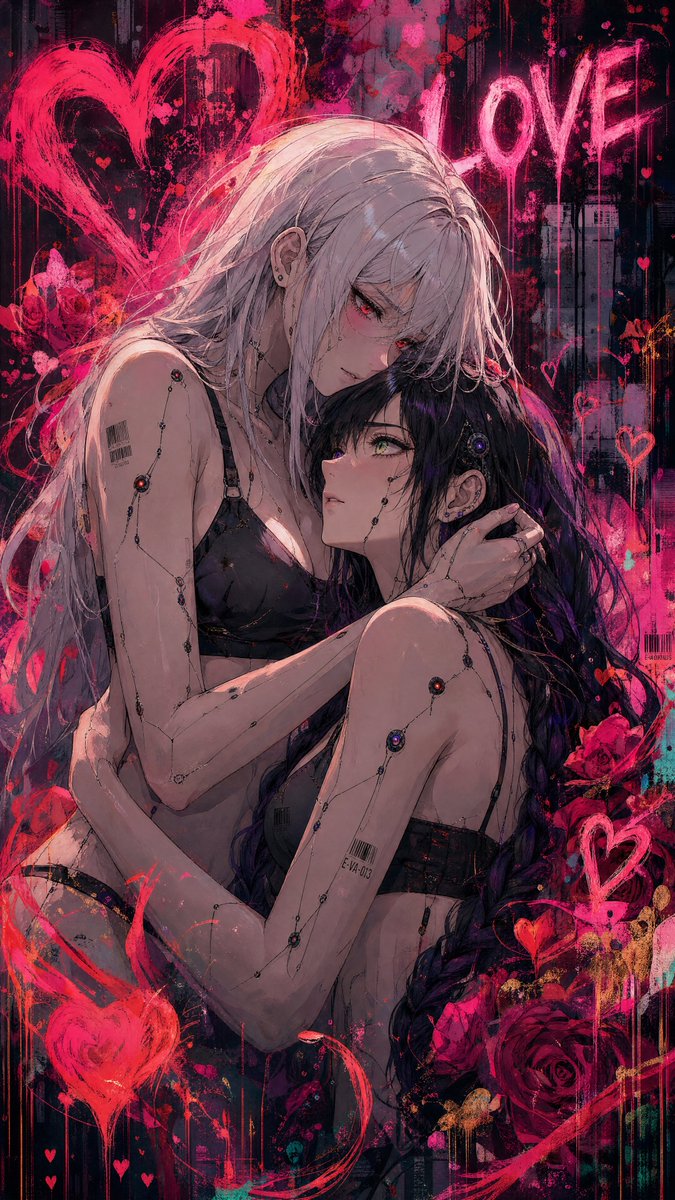
Prompt of the Day: Emotional Manifestation Portrait 🎨💥💜💚
Today's prompt crafted by our good friend the amazing @Novie_VT
Turn your character into the emotional centre of a living mixed-media artwork where colour, paint, typography, light and the surrounding world physically manifest what they are feeling.
Attach one character reference image for a solo portrait.
Optionally attach a second character reference image to create an emotionally connected two-character scene. The second character may comfort, confront, protect, restrain, mirror or otherwise react to the primary character depending on the selected emotion.
Choose one emotion in the prompt, then paste it unchanged.
............................PROMPT STARTS HERE............................
INPUTS
SELECTED EMOTION:
[ENTER ONE: Love, Joy, Rage, Grief, Fear, Hope, Serenity, Madness]
REFERENCE IMAGES:
Image 1: Primary character identity reference. Required.
Image 2: Secondary character identity reference. Optional.
REFERENCE LOGIC:
If only Image 1 is attached, create exactly one character.
If Image 2 is also attached, create exactly two characters: one from Image 1 and one from Image 2.
Do not invent a second person when Image 2 is not attached.
Do not add any additional people.
Keep both identities separate.
Do not duplicate, merge, omit or swap their features.
The character from Image 1 is always the primary emotional subject.
When present, the character from Image 2 is a supporting emotional presence who reacts to, shares, resists, comforts, confronts, protects, restrains, observes or reaches toward the primary character in a way that suits the selected emotion.
The second character must contribute meaningfully to the emotional story without taking over the composition.
EMOTIONAL COLOUR LANGUAGE
The selected emotion controls:
facial expression
eye expression
body language
colour palette
painterly manifestation
typography
environmental behaviour
brushwork
graphic rhythm
overall emotional atmosphere
Use the following palette for the selected emotion:
LOVE
Primary: Scarlet, fuchsia, soft gold
Contrast: Teal, cyan
JOY
Primary: Golden yellow, warm orange, coral
Contrast: Royal blue, turquoise
RAGE
Primary: Crimson, hot magenta, burnt orange
Contrast: Electric cyan, acid yellow
GRIEF
Primary: Slate blue, indigo, ash grey
Contrast: Pale gold, muted rose
FEAR
Primary: Toxic green, deep indigo, charcoal
Contrast: Warm orange, pale ivory
HOPE
Primary: Bright teal, sky blue, white
Contrast: Coral, golden amber
SERENITY
Primary: Soft cyan, ice blue, white
Contrast: Lavender, warm grey
MADNESS
Primary: Neon pink, electric violet, black
Contrast: Lime green, bright cyan
COLOUR APPLICATION
Use the selected emotional palette throughout the image.
The colours should be bold, rich and highly saturated. Do not mute, dull or wash out the primary colours.
Use confident painterly contrast so the emotional palette immediately commands attention.
Contrasting colours should create intentional visual tension rather than passive harmony.
The finished illustration should feel vibrant, energetic and emotionally unforgettable.
CORE CONCEPT
Create a 9:16 vertical portrait-oriented, emotionally explosive semi-realistic illustration.
The primary character must remain clearly recognisable while the selected emotion transforms the surrounding world into a living piece of emotional street art.
This is not a depiction of physical corruption, mutation or bodily transformation.
It is a depiction of emotion becoming visible.
The emotional manifestation should feel alive, intelligent and impossible.
The environment should react to the primary character’s internal emotional state as though reality itself has become an expressive canvas.
When a second character is present, the manifestation should also respond to the emotional relationship between the two characters.
It may visually express connection, conflict, comfort, dependence, distance, tension or shared emotion.
IDENTITY PRESERVATION
Treat each supplied character reference sheet as the canonical identity source for that character.
Do not redesign, genericise, cosmetically idealise or reinterpret either character.
Preserve, as applicable:
facial identity
facial proportions
eye shape
iris colour
hairstyle
hair colour
skin tone
body proportions
clothing
jewellery
accessories
tattoos
species-defining anatomy
recognisable silhouette
Characters with horns, halos, wings, tails, animal ears, animal features, cybernetic limbs or other defining anatomical traits must retain those features accurately.
Identity preservation takes priority over decorative artistic choices.
The finished illustration must immediately read as the same character or characters shown in the supplied references.
PORTRAIT COMPOSITION
Use a 9:16 vertical composition designed around the character’s face, upper body and emotional manifestation.
For a single-character image:
The character should occupy approximately 60–75% of the frame.
The face should remain the main focal point.
Use the vertical space above, beside and below the character for the emotional manifestation.
Keep the head, face, shoulders and important identity features fully visible.
Do not crop defining anatomical traits or signature accessories.
For a two-character image:
The character from Image 1 remains visually dominant.
The character from Image 2 occupies a meaningful supporting position.
Both faces and identities must remain clearly readable.
Arrange the characters naturally within the vertical frame.
The characters may be positioned at different heights, overlapping depths or close together when appropriate.
Use physical distance, eye-lines, gesture and positioning to communicate their emotional relationship.
Do not arrange them as unrelated figures standing beside one another.
Do not reduce either character to a tiny background figure.
Avoid empty backgrounds, static framing and symmetrical fashion poses.
The emotional manifestation should interact with the character or characters rather than functioning as a separate decorative background.
Use the full height of the vertical composition to create layered movement and visual storytelling.
The composition should feel active, balanced and rich enough to reward prolonged viewing.
FACIAL EXPRESSION
The selected emotion must be immediately recognisable from the primary character’s face alone.
The eyebrows, eyelids, gaze, cheeks, jaw and mouth must work together to create a physically believable emotional performance.
Avoid neutral, emotionally ambiguous, fashion-model or beauty-pose expressions unless they genuinely suit the selected emotion.
The expression should feel captured during a real emotional moment rather than posed for the viewer.
Natural facial asymmetry, muscle tension and subtle imperfections are encouraged when they strengthen the performance.
Preserve the character’s facial identity while allowing the facial muscles and expression to adapt naturally to the selected emotion.
When a second character is present, their expression must clearly communicate their emotional reaction or relationship to the primary character.
The viewer should recognise the selected emotion before fully noticing the surrounding manifestation.
BODY LANGUAGE
The selected emotion must affect the entire visible body rather than only the face.
Head position, neck tension, shoulder posture, spine, arms, hands and weight distribution should naturally reflect the emotion.
Avoid passive standing poses, symmetrical fashion poses and static portrait poses unless they genuinely suit the selected emotion.
The primary character should appear to be experiencing the emotion rather than displaying it for the camera.
The selected emotion should remain understandable even if the face were hidden.
When a second character is present, use posture, physical distance, touch, hand placement, eye-line and gesture to communicate the relationship between the characters.
Body language must remain natural, physically believable and emotionally authentic while preserving each character’s identity.
EMOTIONAL MANIFESTATION
The surrounding world visually expresses the selected emotion.
The manifestation should emerge naturally from the primary character rather than appearing pasted over the finished portrait.
Possible transformations include:
hair dissolving into flowing brush strokes
shadows evolving into abstract creatures
clothing transitioning into painterly textures
paint, light and colour weaving around the characters
graphic forms emerging from movement, breath, gaze or touch
symbolic forms developing from the emotional interaction
painterly elements bridging or separating the two characters
vertical streams of colour rising or falling through the composition
symbolic shapes framing the face without obscuring it
When a second character is present, parts of the manifestation may stretch, fracture, flow, collide or form a bridge between them.
Preserve the recognisable silhouettes of both characters.
The viewer should struggle to identify exactly where the characters end and the emotional manifestation begins.
The relationship between the characters, environment and manifestation must feel organic rather than layered, pasted on or composited.
STREET-ART LANGUAGE
Draw inspiration from expressive contemporary street art, graphic design, mural painting and layered mixed-media illustration.
The manifestation may include:
expressive brush strokes
paint splashes
ink drips
graffiti textures
torn poster fragments
halftone patterns
abstract symbols
stylised typography
graphic shapes
painterly ribbons
dynamic colour fields
symbolic creatures
surreal eyes
masks
floral motifs
celestial elements
geometric fragments
Every element must feel emotionally motivated rather than randomly decorative.
Use the vertical format intentionally, allowing painterly forms, drips, ribbons, symbols and colour fields to travel through the height of the image.
ENVIRONMENTAL STORYTELLING
The emotional manifestation should reshape the surrounding space.
It should appear as though the emotion has escaped the primary character and begun rewriting the world around them.
Background elements should interact naturally with the character or characters.
Some forms may pass behind them.
Others may cross the foreground, wrap around their bodies, react to their movements or create visual connections between them.
Use foreground, middle-ground and background layers to create convincing depth within the vertical frame.
The portrait should feel immersive rather than flat.
TYPOGRAPHY
Typography is optional and should remain sparse but expressive.
Use no more than one or two words, or one very short phrase.
Possible examples:
LOVE
RAGE
HOPE
FEAR
BREATHE
LET GO
STAY
REMEMBER
Choose typography that supports the selected emotion.
The lettering should integrate naturally into the artwork and resemble hand-painted graffiti, mural lettering or expressive brushwork.
Typography may follow the vertical flow of the composition, but it must remain easy to read.
Do not use digital interface typography.
Use only meaningful, correctly spelled words.
Do not add filler text, random letters, fake labels, signatures or unrelated logos.
Typography must not overpower the characters or emotional manifestation.
LIGHTING
Use semi-realistic cinematic lighting with strong contrast and believable natural skin rendering.
Painterly coloured light from the emotional manifestation should subtly illuminate the character or characters.
Keep faces grounded in coherent, believable light while allowing the surrounding manifestation to provide dramatic colour accents.
When two characters are present, use lighting to visually connect or contrast them while keeping their faces, bodies and silhouettes distinct.
VISUAL STYLE
Create a cohesive semi-realistic digital painting combining:
painterly realism
expressive mixed media
contemporary street art
layered graphic design
rich painterly textures
natural anatomy
detailed and emotionally expressive eyes
dynamic but readable composition
layered visual storytelling
The character rendering, street-art elements, typography, lighting and environment must feel like parts of one unified artwork rather than separate visual styles placed together.
FINAL GOAL
The finished 9:16 vertical portrait must immediately communicate the selected emotion through:
facial expression
body language
colour
composition
lighting
environmental transformation
the relationship between the characters when two references are attached
The character from Image 1 is the emotional anchor.
When Image 2 is attached, the second character should deepen the emotional story through a clearly readable relationship with the primary character without becoming the dominant subject.
The surrounding manifestation should transform emotion into an unforgettable visual experience.
The final illustration should invite repeated viewing and reveal new details throughout the painterly environment while preserving each character’s identity and emotional authenticity.
..............................END OF PROMPT..............................
#POTD #PromptOfTheDay #AIArt #DigitalArt #CharacterArt #PortraitArt #StreetArt #MixedMedia #EmotionalArt #CharacterDesign
🖼️ 参考图(最多 3 张,选填):