← 返回画廊
# UNIVERSAL OUTFIT TRANSFER — STRICT CHARACTER IDENTITY PRES
提示词来自 @Le_Tavernicole 的原推 ↗ · 版权归原作者所有
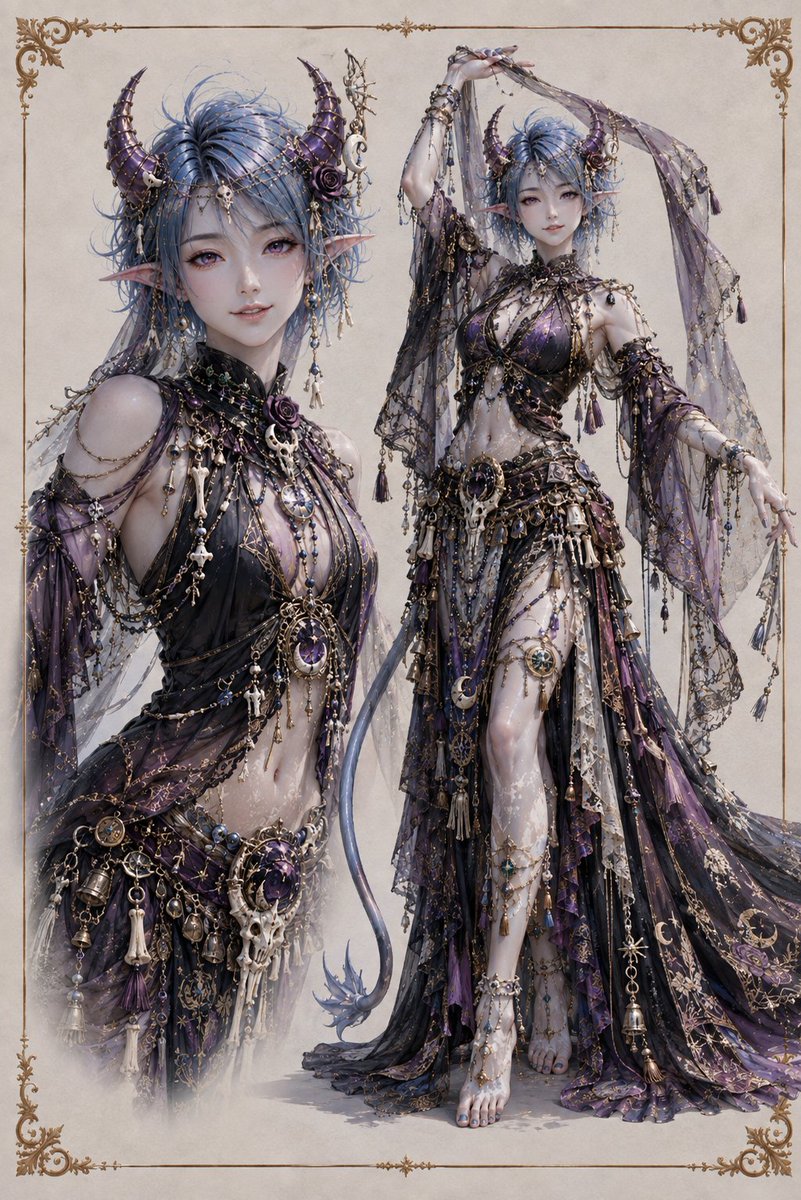
# UNIVERSAL OUTFIT TRANSFER — STRICT CHARACTER IDENTITY PRESERVATION
## DANCER OF DEATH — ROMANI-INSPIRED RITUAL DANCER × FANTASY NECROMANCER-PRIESTESS
Use the newly uploaded character image as the sole and exclusive reference for identity, anatomy, species, proportions, recognizable traits, canonical colors, markings, prosthetics, cybernetics, and non-human features.
Create one cohesive ceremonial outfit combining elegant wandering folk-dancer layers, Romani-inspired dance adornment, skirts, scarves, shawls, coins, tassels and jewelry with death-priestess regalia, necromancer clothing, funerary and ancestral motifs, refined bone ornaments, and sophisticated dark-fantasy couture engineered for spinning, turning, kneeling, sweeping gestures, and dramatic ritual poses.
The character should belong naturally to an elegant order uniting traveling dancers, spirit mediums, ancestral priestesses, musicians, mourners, and necromantic ritualists. Keep the design noble, mysterious, sacred, wearable, beautiful, and non-gory—never a Halloween witch, generic belly dancer, Romani stereotype or caricature, nightclub or carnival costume, pirate, peasant, gothic bride, generic sorceress, skeleton, corpse, zombie, heavy armor, fetishwear, lingerie, or random bone pile.
Transfer only the outfit concept, materials, regalia, ornament structure, and silhouette. Custom-tailor every component to the existing body: the outfit adapts to the character, never the reverse. The character must be clearly adult.
MASTERPIECE, best quality, ultra-detailed, high-resolution full-body character design, elegant dark-fantasy couture, ritual Dancer of Death, necromancer-priestess regalia, flowing layered textiles, refined bone jewelry, realistic garment construction, sophisticated embroidery, intricate metalwork, ceremonial beadwork, dramatic movement, clean anatomy, sharp focus, polished illustration.
---
## 1. ABSOLUTE IDENTITY AND ANATOMY LOCK
Preserve exactly:
* Face shape, facial features, expression, makeup identity, eyebrows, eye shape and color.
* Hairstyle, hairline, length, texture, volume, color, and recognizable silhouette.
* Skin tone, complexion, body type, height, shoulder width, chest, ribcage, waist, abdomen, hips, thighs, legs, arms, hands, feet, musculature, and all original proportions.
* Tattoos, scars, freckles, birthmarks, vitiligo, piercings, markings, and canonical color placement.
* Horns, animal ears, tails, wings, fins, feathers, scales, fur, claws, paws, hooves, digitigrade legs, aquatic anatomy, extra canonical anatomy, cybernetics, prosthetics, and all species-specific traits.
* Canonical age, personality, visual presence, and recognizable identity.
Do not copy any external model, dancer, priestess, necromancer, costume reference, or previously generated character.
Never slim, widen, shorten, lengthen, compress, enlarge, reduce, masculinize, feminize, humanize, recolor, or otherwise modify the character. Do not alter chest size, waist, hips, thighs, legs, torso, shoulders, height, species, markings, hair, eyes, skin, prosthetics, cybernetics, or non-human anatomy. Do not conceal defining traits except where a practical garment attachment briefly overlaps them.
---
## 2. CORE DESIGN IDENTITY
The character is an elegant ritual dancer serving as:
* Guide of spirits.
* Keeper of ancestral memory.
* Ceremonial mourner.
* Necromantic priestess.
* Performer of funerary dances.
* Guardian of graves and sacred remains.
* Mediator between living and dead.
* Wandering oracle.
* Celebrant of death as transition rather than horror.
Balance three equal identities:
### Ritual dancer
The outfit must permit spinning, turning, quick steps, kneeling, raised arms, back arches, sweeping gestures, scarf dancing, hip movement, slow ceremonial motion, and energetic circular dance movement.
### Wandering folk-dancer adornment
Use layered skirts, asymmetrical overskirts, coin belts, beaded hip scarves, embroidered shawls, draped scarves, tassels, fringe, bells, charms, layered necklaces, armlets, anklets, flowing fabric panels, and handcrafted borders. Interpret them as original dark-fantasy couture, never as a direct copy of a real-world ceremonial outfit or as stereotype, caricature, cliché, or costume-shop imagery.
### Death necromancer-priestess
Use funerary veils, polished bone ornaments, ancestral charms, blackened silver, grave-metal jewelry, ash-colored embroidery, raven or moth motifs, crescents, eclipses, thorns, funeral flowers, spirit bells, ritual chains, reliquaries, protective sigils, dark gemstones, ceremonial cords, priestess pectorals, and grave-cloth drapery. Sacred and ceremonial, never gruesome.
---
## 3. DANCE SILHOUETTE AND MOBILITY
Create a dramatic full-body silhouette with:
* Fitted or softly structured dance bodice.
* Natural, unaltered waist.
* Broad ornamental dance belt or hip assembly.
* Multiple flowing skirt layers with asymmetrical openings or slits.
* Long ritual panels, scarves, veils, and a manageable rear drapery or short train.
* Moving jewelry concentrated around head, neck, waist, wrists, and ankles.
* Strong vertical elegance balanced by circular motion.
Nothing may restrict shoulders, elbows, wrists, hips, knees, legs, feet, tails, wings, digitigrade movement, mechanical articulation, fins, or other non-human anatomy. The outfit must look complete both standing still and in motion.
---
## 4. HEADPIECE, HAIR ORNAMENTS, AND VEIL
Create a secure, dance-compatible death-priestess headpiece fitted around the original hair, ears, horns, fins, antennae, cybernetics, and other traits.
Use a narrow circlet, open crown, crescent diadem, dark floral crown, thin halo-like branches, temple chains, or partial mourning veil, with blackened silver or antique gold, dark gemstones, beads, coin disks, bells, funeral flowers, raven- or moth-inspired metalwork, moons, eclipses, and soft thorn motifs.
Include only limited polished bone: a carved crescent, two delicate hairpins, tiny vertebra beads, forehead charm, small phalange-inspired pendants, or miniature jaw-shaped metal-and-bone ornament.
The headpiece must be physically constructed, balanced, secured, integrated with the original hairstyle, and compatible with movement. Never replace, flatten, shorten, recolor, or unnecessarily hide the hair, ears, horns, or species traits. No skull fusion, floating parts, oversized fantasy crown, European crown, bridal tiara, cartoon skull helmet, or full animal-skull mask.
Add fine chains, dark coins, obsidian, onyx, smoky quartz, garnet, amethyst, moonstone, bone-white beads, bells, tassels, funeral flowers, ribbons, cords, and embroidered edges around the existing hairstyle without redesigning it.
Optional veil: semi-transparent, attached to the headpiece or one temple, divided into narrow panels, flowing behind the shoulders, and subtly embroidered. It must not hide the face or defining traits, become rigid, bridal, cape-like, or fuse with the hair.
---
## 5. FACE AND EAR ADORNMENT
Preserve the original face and makeup. Optional ritual details may include a small forehead pendant, temple chains, tiny tear-shaped gemstones, ash-grey motifs, crescents, funeral flowers, fine metallic dots, or one thin ceremonial line near brow or cheekbone.
All additions must remain secondary, avoid obscuring scars, freckles, tattoos, vitiligo, or canonical markings, and must not resemble readable text, random “tribal” markings, skull makeup, or a skeletal face.
Use lightweight, moving ear jewelry: layered disks, crescents, chains, bells, gemstones, bone-white beads, tassels, funeral flowers, raven, moth, moon, thorn, or tiny polished-bone drops. Adapt naturally to animal ears, pointed ears, multiple ears, mechanical ears, ear fins, or horn-adjacent anatomy. Do not remove or reshape ears, create painfully heavy jewelry, or add inappropriate piercings.
---
## 6. COLLAR, PECTORAL, AND CENTRAL MEDALLION
Create a flexible ceremonial collar and upper-chest arrangement combining priestess authority with dancer elegance:
* Articulated blackened-silver or antique-metal bands.
* Dark textile layers, bead rows, chain loops, coin-like disks, small bone plaques, moonstone or obsidian inlays.
* Funeral flowers, moths, ravens, moons, eclipses, thorns, ancestral motifs.
Below it, add a layered pectoral with bead strands, chains, bells, gemstone drops, bone-white beads, tiny carved bone details, reliquary, eclipse or moon medallion, ancestral eye, spirit flame, elegant skeletal-hand metalwork, funerary flower, or character-specific symbolism.
Place one important emblem over the sternum or upper torso. It may be circular, oval, crescent, subtle coffin- or shrine-shaped, floral, or winged, framed by chains, dark lace, or bone-white beads. Use blackened silver, antique gold, dark gemstone, carved bone accents, engraved borders, bells, drops, chains, and tassels.
The collar and pectoral must be secure, articulated, flexible, separate from the body, and dance-compatible. Do not create heavy armor, an Egyptian broad collar, medieval gorget, modern jewelry set, random bone pile, modern logo, readable text, random occult symbol, default pentagram, cheap skull graphic, or cartoon skeleton.
---
## 7. DANCE-READY BODICE AND UPPER DRAPERY
Create one coherent, secure bodice structure: halter, cross-wrap, fitted sleeveless vest, asymmetrical shoulder, supported off-shoulder, tasteful deep neckline, high-neck priestess style, or layered scarf-bodice.
Use secure coverage, realistic support, flexible side panels, reinforced seams, structural lacing, proper closures, embroidered borders, dark metallic thread, beads, coins, carved-bone toggles or clasps, silk, gauze, velvet, cotton, lace, open-weave cloth, sparing leather, and character-colored gemstones.
Tailor panel width, neckline depth, side coverage, underbust support, shoulder placement, straps, closures, length, curvature, and seams to the uploaded anatomy. Never enlarge, reduce, compress, or reshape the chest, ribcage, waist, torso, or shoulders; never expose explicit anatomy or use impossible support.
No bra, bikini, lingerie, European corset, latex top, fetish harness, armor, or generic fantasy crop top.
Add movement-focused drapery such as an embroidered shawl, divided shoulder scarf, mourning veil, sash, soft back mantle, wrist-to-shoulder panels, diagonal scarf, or detachable ritual veil. Use lightweight gauze, chiffon, cotton, lace, open weave, velvet borders, embroidered edges, coins, bells, tassels, and tiny bone beads. It must follow gravity, stay visibly attached, move naturally, avoid hiding the design or markings, and never become a cape or interfere with wings, tails, fins, or machinery.
---
## 8. WAIST, HIP ASSEMBLY, AND RELIQUARY
Create a dominant dance belt at the natural waist or anatomical equivalent using:
* Fitted inner support.
* Layered textile bands and asymmetrical hip scarf.
* Coin chains, beads, metal plaques, bells, tassels, gemstone pendants, bone-white beads, small polished bone charms, ritual chains, fabric knots, embroidered side panels.
* Funeral flowers, moons, eclipses, ravens, moths, thorns, or ancestral motifs.
Sound and movement may come from small coins, controlled bells, beads, chains, and tassels. The belt must not narrow the waist, reshape hips, compress the abdomen, float, dig into the body, resemble a modern belly-dance costume, become overloaded, or look like a pirate sash.
Add one central or slightly off-center reliquary: crescent medallion, dark gemstone shrine, funerary-flower plaque, elegant skeletal-hand clasp, spirit-lantern emblem, raven, moth, carved bone disk, or character-specific symbol. Use blackened silver, bronze, dark gold, carved bone, onyx, obsidian, smoky quartz, garnet, amethyst, moonstone, chains, bells, drops, and tassels. Important but not so rigid or large that it blocks movement.
---
## 9. LAYERED RITUAL DANCE SKIRT
Create a full- or ankle-length skirt built for spinning, stepping, kneeling, leg extension, sudden stops, and dramatic poses.
Combine:
* Fitted upper-hip layer.
* Multiple circular, pleated, gathered, or bias-cut layers.
* Asymmetrical overskirts, split-front panels, deep side openings, high-low hems, handkerchief points.
* Alternating opaque and semi-transparent fabrics.
* Draped scarves, fringe, coins, tassels, bells, embroidered borders.
* Long narrow ritual panels and a manageable rear train.
Use intentional couture asymmetry, never total symmetry.
### Inner layer
Provide secure coverage and full movement using fitted dance shorts, split underskirt, wrapped dance cloth, or equivalent body-appropriate support. Prevent explicit exposure through openings.
### Outer layers
Decorate long panels with funeral flowers, moon phases, eclipses, ravens, moths, thorns, spirit flames, ancestral hands, abstract skeletal geometry, character-specific symbols, and subtle bone-bead fringe.
The skirt must spread and separate visibly during movement without intersecting the body. It must not become a ballroom gown, European skirt, mermaid dress, tutu, flamenco copy, modern belly-dance skirt, pirate skirt, ragged necromancer robe, corpse costume, loincloth, or static restrictive robe.
---
## 10. REQUIRED REFINED BONE ADORNMENT
Include several clearly visible bone ornaments, used sparingly and intentionally.
Choose a few:
* Two carved bone hairpins.
* Polished bone crescent.
* Vertebra-shaped beads.
* Small carved clasp.
* Short chain of finger-bone-shaped charms.
* Miniature rib-shaped pectoral detail.
* Polished jaw-shaped belt ornament.
* Bone-white buttons or carved disks.
* Delicate skeletal-hand pendant.
* Tiny bone-bead scarf fringe.
* One anklet charm.
* Carved-bone fan ribs or ritual handle.
* Short bone-and-metal reliquary.
All bone must be clean, polished, carved, non-gory, non-decaying, secure, scaled correctly, and integrated with metal, textiles, beads, or gemstones. Bones function as sacred relics, ancestral symbols, jewelry, or ritual tools.
Never cover the body in bones; create ribcage armor, femur weapons, bone spikes, bloody remains, gore, flesh, rot, severed heads, trophies, skeleton costumes, or skeletal anatomy.
---
## 11. ARM, HAND, THIGH, ANKLE, AND FOOT ORNAMENTS
Use lightweight, dance-compatible ornaments.
**Arms and wrists:** engraved armbands, braided cords, coins, beads, bells, dark gemstones, small bone plaques, tassels, funeral flowers, crescents, eclipses, flexible cuffs, blackened-silver plates on soft backing, chain fringe, thin bracelets, bangles, bone-bead strands, and spirit charms.
**Hands:** optional bracelet-to-ring chains, fine finger chains, gemstone or carved-bone rings, crescent rings, skeletal-hand-inspired metal plaques, bells, tassels, and ritual cords. Preserve finger count, claws, tattoos, mechanical hands, identity-essential gloves, and species anatomy.
**Thighs:** one or two thin ornaments visible through skirt openings: chains, beads, embroidered bands, small coins or bells, dark gemstones, bone-white beads, one polished bone charm, crescent, or funeral flower. They must follow anatomy and never resemble lingerie, garters, fetishwear, or floating jewelry.
**Ankles and feet:** layered anklets, bells, chains, coins, beads, gemstones, bone-white accents, tassels, and one or two small bone pendants. Bare feet may use delicate ankle-to-foot chains and a central gem. Preserve defining footwear and adapt it through embroidery, coins, bells, gemstones, blackened metal, bone-white details, and tassels. Never force human footwear onto paws, hooves, claws, digitigrade feet, fins, or mechanical feet.
Optional accessory: one or two embroidered scarves, folding fan with carved-bone ribs, tambourine, frame drum, finger cymbals, spirit bells, dark floral wreath, ritual lantern, short ancestral staff, or ornamental non-combat ceremonial blade. Do not obscure the outfit or turn the character into a warrior.
---
## 12. BODY-ADAPTIVE CONSTRUCTION
Tailor bodice to chest and torso; collar to neck; belt to natural waist and hips; skirt length, volume, and openings to height, proportions, stride, and leg anatomy; jewelry to body scale; headpiece to hair, ears, horns, fins, antennae, and technology; veils and shawls to wings, tails, fins, dorsal structures, and back anatomy; limb ornaments to musculature, prosthetics, paws, hooves, claws, or machinery.
For tails: create a tailored opening, divide rear skirt layers around the tail, preserve full movement, and keep the belt secure.
For wings: use open-back or separated shoulder construction; place veils and shawls between or beneath wings; preserve the full silhouette.
For horns: shape the headpiece around them; never shorten, remove, or intersect them.
For animal ears: keep them visible and attach ornaments beneath, behind, or around them without replacing them with human ears.
For aquatic bodies: adapt panels around fins or tails, use flowing textile strips when needed, and preserve scales, fins, and markings.
For cybernetics: integrate clasps and jewelry around machinery without hiding defining parts. Use engraved blackened metal, dark cables, and gemstone mosaics that harmonize with existing technology.
For digitigrade legs: preserve structure and adapt hems, anklets, and footwear; never straighten them into human anatomy.
Every component must look individually engineered for the uploaded character.
---
## 13. CHARACTER-ADAPTIVE COLOR PALETTE
Harmonize the Dancer of Death palette with the character’s canonical colors.
* Primary canonical color: bodice, central skirt layer, or dominant shawl.
* Secondary color: overskirts, scarf panels, embroidery, or veil.
* Eye, magical-glow, or signature color: gemstones and small highlights.
* Add one deep complementary shade.
* Universal accents: bone white, ivory, ash grey, smoke, charcoal, blackened metal, and restrained antique gold, bronze, copper, silver, electrum, or rose gold chosen to match the character.
Suggested dark neutrals: charcoal, smoke, ash brown, midnight blue, plum, oxblood, forest green, burnt umber, dusty mauve, funeral violet. Pale accents: bone white, ivory, moonlight silver, ash grey, faded cream, pale lilac, dusty rose, mist blue.
Choose warm, cool, green, purple, pink, or monochrome combinations from these ranges according to the uploaded character, always preserving strong contrast around white hair and using only one or two dominant accents.
Never recolor body, hair, eyes, tattoos, markings, prosthetics, or cybernetics. Keep the palette controlled and elegant; never force black-red-purple onto every character.
---
## 14. MATERIALS, SYMBOLS, AND CRAFTSMANSHIP
Use distinct, believable luxury materials.
**Textiles:** handwoven cotton, fine linen, matte silk, chiffon, gauze, organza, velvet, worn luxury brocade, embroidered lace, open-weave ceremonial cloth, translucent layers, lightweight suede, and soft leather used sparingly.
**Metals:** blackened or antique silver, aged bronze, dark copper, antique gold, gunmetal, oxidized metal, pale electrum, and character-appropriate metals.
**Stones and organic materials:** obsidian, onyx, smoky quartz, garnet, amethyst, moonstone, labradorite, jet, hematite, dark pearl-like beads, bone-white beads, canonical-color gemstones, polished or carved bone, shell, dried funeral flowers, minimal dark feathers, natural cords, braided fibers, wood, and seed beads.
Avoid plastic, rubber, latex, vinyl, synthetic straps, cheap costume fabric, printed jewelry, flat metal, random glow, holograms, visible modern zippers, and generic filigree covering every surface.
Use one coherent language of death, memory, ancestry, dance, and transition. Motifs may include moons, eclipses, ravens, moths, funeral flowers, wilting roses, poppies, thorns, spirit flames, hourglasses, broken circles, closed eyes, dancers, skeletal hands, abstract ribs, ancestral masks, bells, veils, stars, paths, doors, keys, and lanterns. Express them through embroidery, engraving, beadwork, relief, woven borders, cutwork, lace, painting, or carved bone.
No readable fake text, random runes, incoherent occult circles, default pentagrams, crosses, hieroglyphs, Mesoamerican glyphs, Norse or Celtic symbols, unrelated religious imagery, logos, or watermarks.
Show seams, reinforced stress points, closures, fastenings, believable tension and weight, natural folds, separate textile layers, individually attached coins, threaded beads, constructed tassels and bells, mounted gemstones, drilled or metal-set bone, flexible chains, supported belts, correct garment overlap, handcrafted variation, finished hems, and dance articulation. Nothing may float, fuse into the body, intersect anatomy, or appear printed when it should be attached.
---
## 15. MOVEMENT AND PHYSICAL BEHAVIOR
The outfit must visibly respond to the dance:
* Skirts spread during turns.
* Tassels swing.
* Coins and bells shift.
* Veils trail behind.
* Beads move independently.
* Hair ornaments follow hair motion.
* Long panels curve through the air.
* Fabric folds around bent knees.
* Hip scarves react to torso rotation.
* Jewelry remains secured.
Avoid rigid cloth, metallic fabric behavior, body intersections, chain intersections, floating ornaments, impossible tangles, or excessive wind unrelated to the pose.
---
## 16. PRESENTATION AND ATMOSPHERE
Show the complete character head to feet in front or slight three-quarter view. Use an elegant ritual-dance pose with natural hip rotation and torso twist, one leg forward or crossing, one arm raised, the other extended or holding a scarf, graceful hands, separated skirt panels, complete headpiece, and visible but non-dominant bone ornaments. Preserve the original expression and personality.
Pose options: beginning a slow turn; holding the skirt; raising a scarf overhead; poised dance finish; kneeling funerary gesture; turning with one foot lifted; graceful back arch; reaching toward an unseen spirit; holding a ceremonial fan; or dancing inside a candle circle.
Use a restrained moonlit ritual hall, ruined fantasy sanctuary, candlelit crypt, ancestral shrine, nocturnal forest clearing, circular stone dance floor, graveyard courtyard, dark caravan pavilion, traveling ritual tent, or hall of bells and veils.
Optional atmosphere: candlelight, thin mist, ash, petals, incense, faint spirit lights, ribbons, floral offerings, lanterns, and ancestral statues. No extra characters, corpses, gore, remains, skeleton armies, distracting monsters, excessive effects, or bright neon unless canonical.
Keep the character and outfit dominant. Use moonlight, candlelight, twilight, or ceremonial lighting with sharp detail on embroidery, bones, coins, bells, gemstones, metalwork, and moving fabric.
---
## 17. HARD EXCLUSIONS
Never alter identity, face, hair, anatomy, proportions, age, colors, species, markings, non-human traits, prosthetics, cybernetics, or canonical footwear; add extra characters, limbs, or traits; or force a different body type.
No stereotypical Romani imagery, generic black dress, modern belly dancer, pirate, flamenco copy, Halloween witch, generic necromancer robe, gothic bride, skeleton costume, lingerie, fetishwear, latex, vinyl, corset, heavy armor, huge cape, restrictive garments, gore, rot, severed remains, trophies, skull face or makeup, excessive bones, random occult symbols, fake text, logos, watermarks, floating or fused ornaments, impossible intersections, explicit anatomy, pornographic framing, or anything that prevents dancing.
---
## 18. FINAL PRIORITY ORDER
1. Preserve exact identity, anatomy, proportions, species traits, markings, and canonical colors.
2. Fit every element to the character; never reshape the character.
3. Create one cohesive, regal Dancer of Death culture and silhouette.
4. Balance wandering folk-dancer movement with necromancer-priestess authority.
5. Keep the full design practical for ritual dancing and dramatic poses.
6. Include several visible, refined, polished, non-gory bone ornaments.
7. Preserve layered skirts, hip scarf, belt, reliquary, pectoral, headpiece, jewelry, veils, and flowing textiles.
8. Use character-adaptive colors, luxury materials, realistic construction, secure attachment, believable weight, and natural motion.
9. Avoid stereotypes, costume imagery, gore, skeleton suits, fetish styling, and generic dark fantasy.
10. Produce an elegant, mysterious, wearable, unmistakable Dancer of Death.
🖼️ 参考图(最多 3 张,选填):